

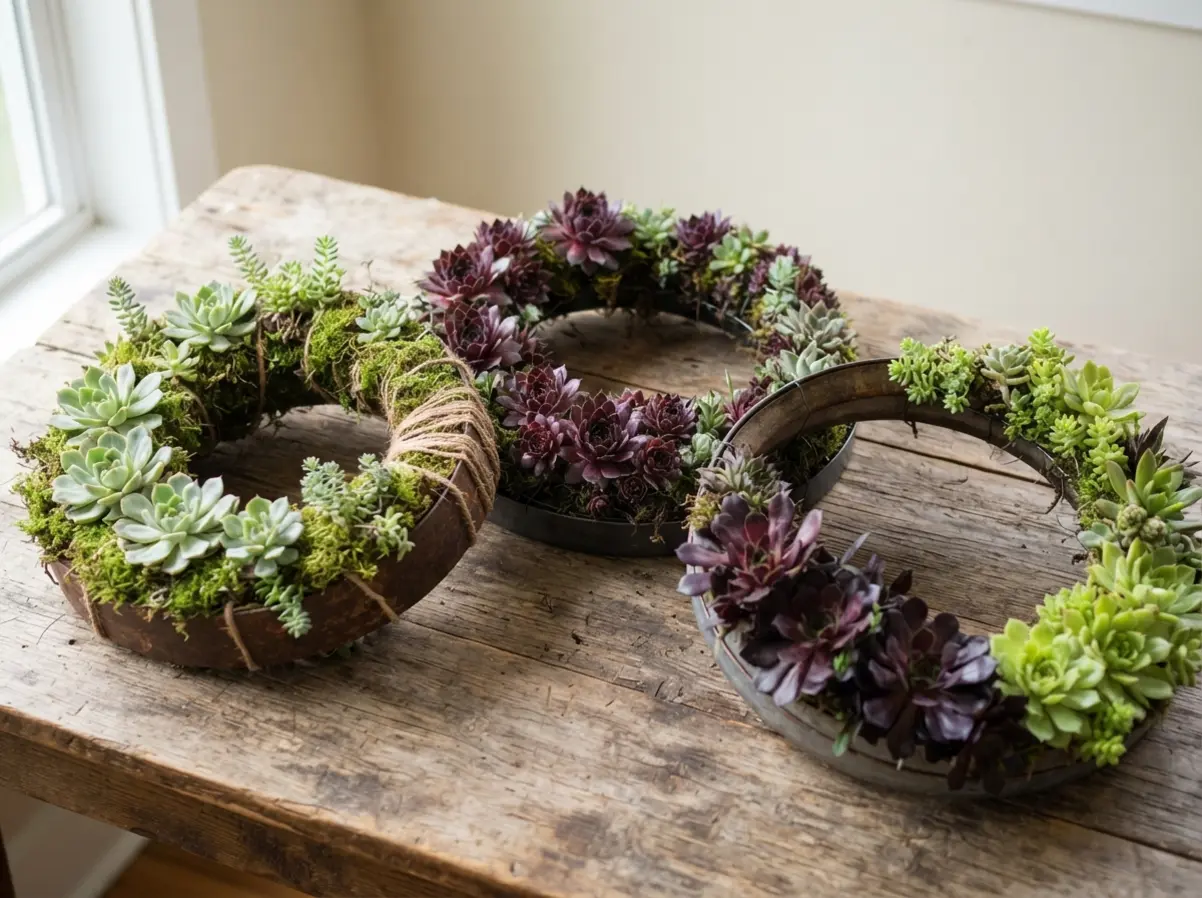
Sourcing and Seasoning Antique Steel Hoops
Local wineries or cooperages are your best bet for finding genuine barrel rings, as these retain the authentic oxidized patina that makes the finished diy wine barrel ring succulent wreath feel industrial and lived-in. You want to avoid new, shiny steel bands because they lack the visual texture that contrasts so beautifully with soft succulent leaves. Once you have your ring, give it a good scrub with a stiff brush and let it dry completely in the sun for a day or two. This step eliminates any residual wine sugars or mold that could affect your moss foundation.
Hydration Methods for Sphagnum Moss Substrates
Preparing the foundation for a diy wine barrel ring succulent wreath requires soaking your sphagnum moss in a bucket of water for at least twenty minutes until it’s fully saturated and pliable. You achieve the consistent compaction your plants need with this simple process, but trust me on this: squeezing out the excess water by hand beats letting it drip dry. You need the moss damp, not dripping, to hold its shape when you pack it into the ring. A uniformly moist foundation prevents soil erosion and stops those beautiful rosettes from sinking into a hollow spot later.
1. Rustic Farmhouse Mossy Echeveria Wreath
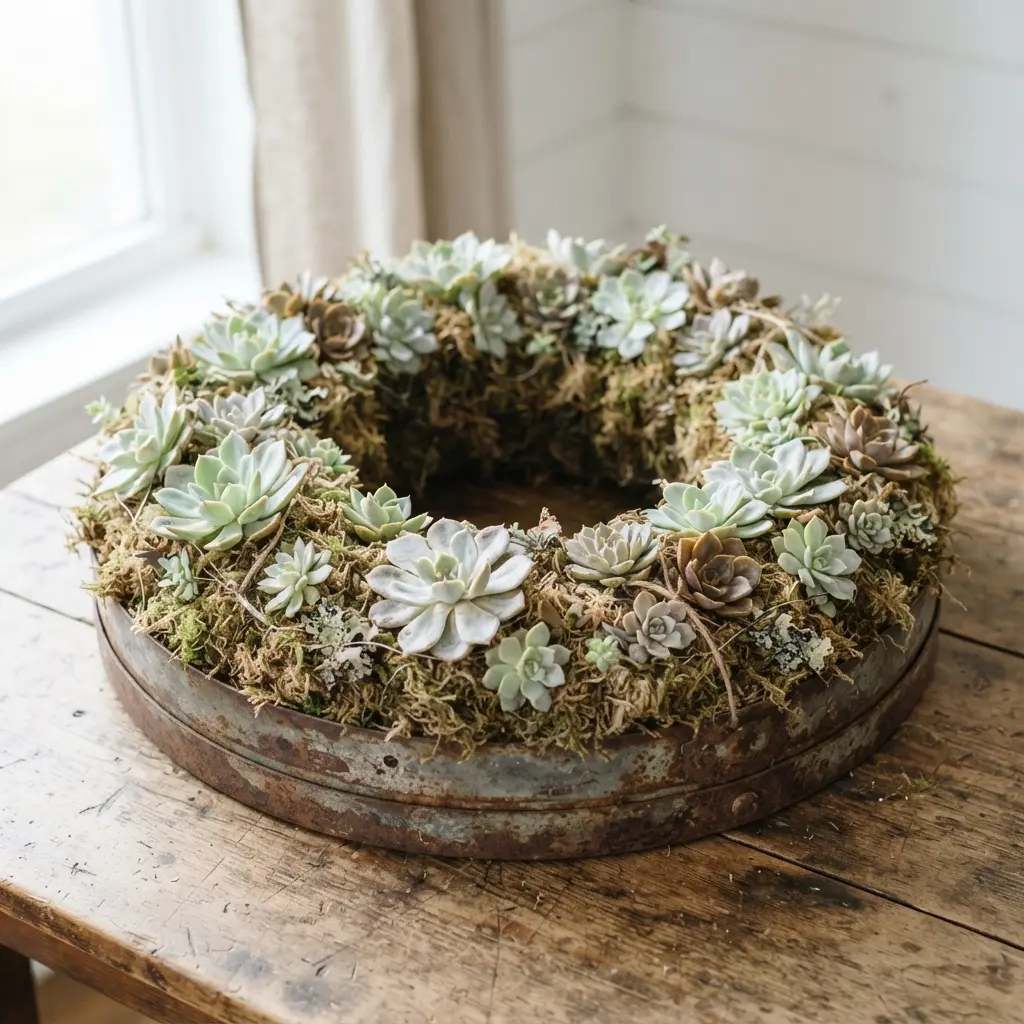
Building this diy wine barrel ring succulent wreath surprised me. It looks like a professional floral arrangement, but you construct it yourself using simple cuttings. The secret is starting with a sturdy wire wreath form packed tightly with moistened sphagnum moss. You then insert your calloused Echeveria cuttings into the moss, arranging them by color and size for a lush look. It works because the shallow roots of succulents thrive in the mossy base, creating a living piece of art.
Let the cuttings dry for a few days before planting, and you will love how your project turns out. For a complete walkthrough, you need to create your own succulent wreath to understand the full process.
2. Modern Minimalist Spiky Haworthia Wreath
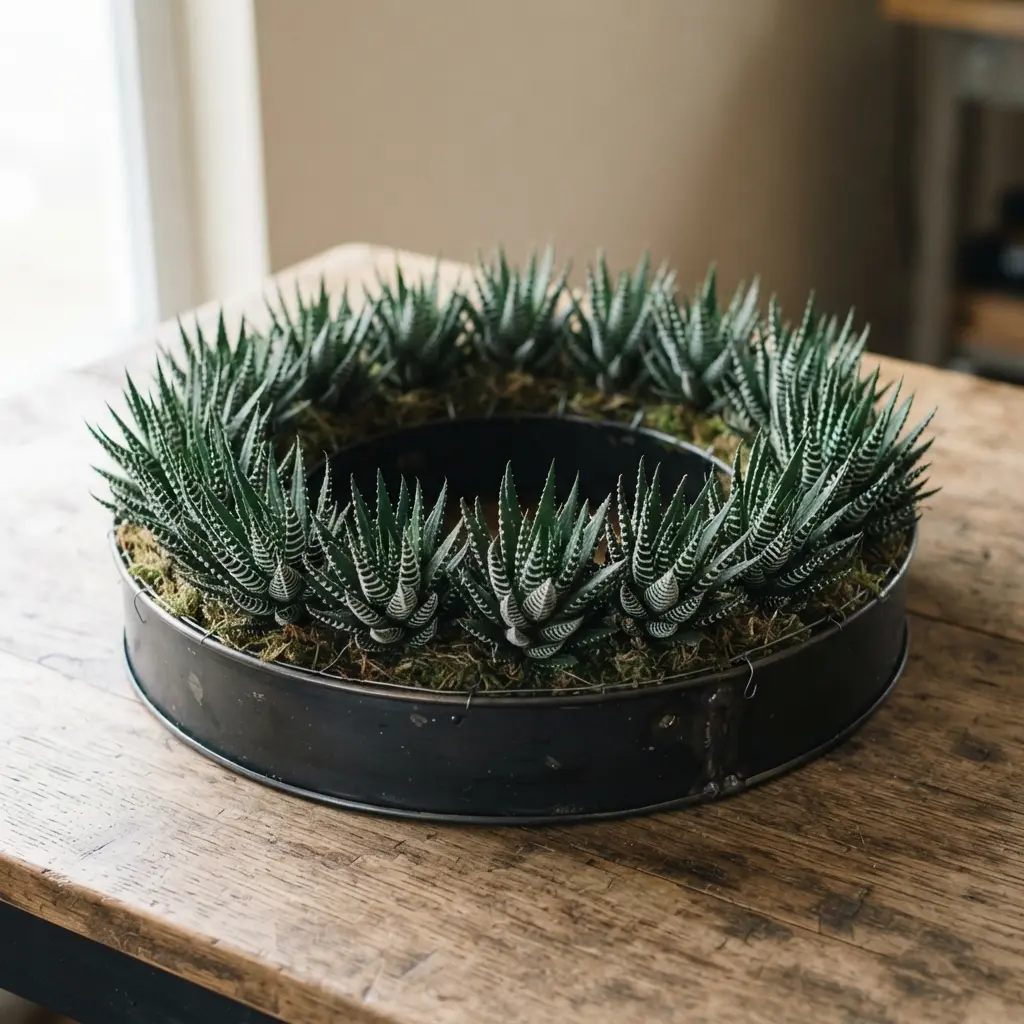
Ever feel like a diy wine barrel ring succulent wreath is a bit too busy? This design fits you perfectly. It focuses on the clean, architectural beauty of spiky haworthia succulents on a simple base like a metal hoop or concrete slab. You arrange a few plants with plenty of space around them, letting their geometric shapes take the spotlight.
I love how this style feels sophisticated yet uncomplicated. It works because it relies on texture and form instead of endless decoration, making it a perfect fit for a contemporary space.
My top tip is to start with fewer plants than you think you need. Before you start attaching anything, play with a few creative succulent tea cup ideas to get a feel for arranging these unique specimens. That practice will build your confidence for this sleek project.
3. Sun-Drenched Trailing Sedum Garden Wreath
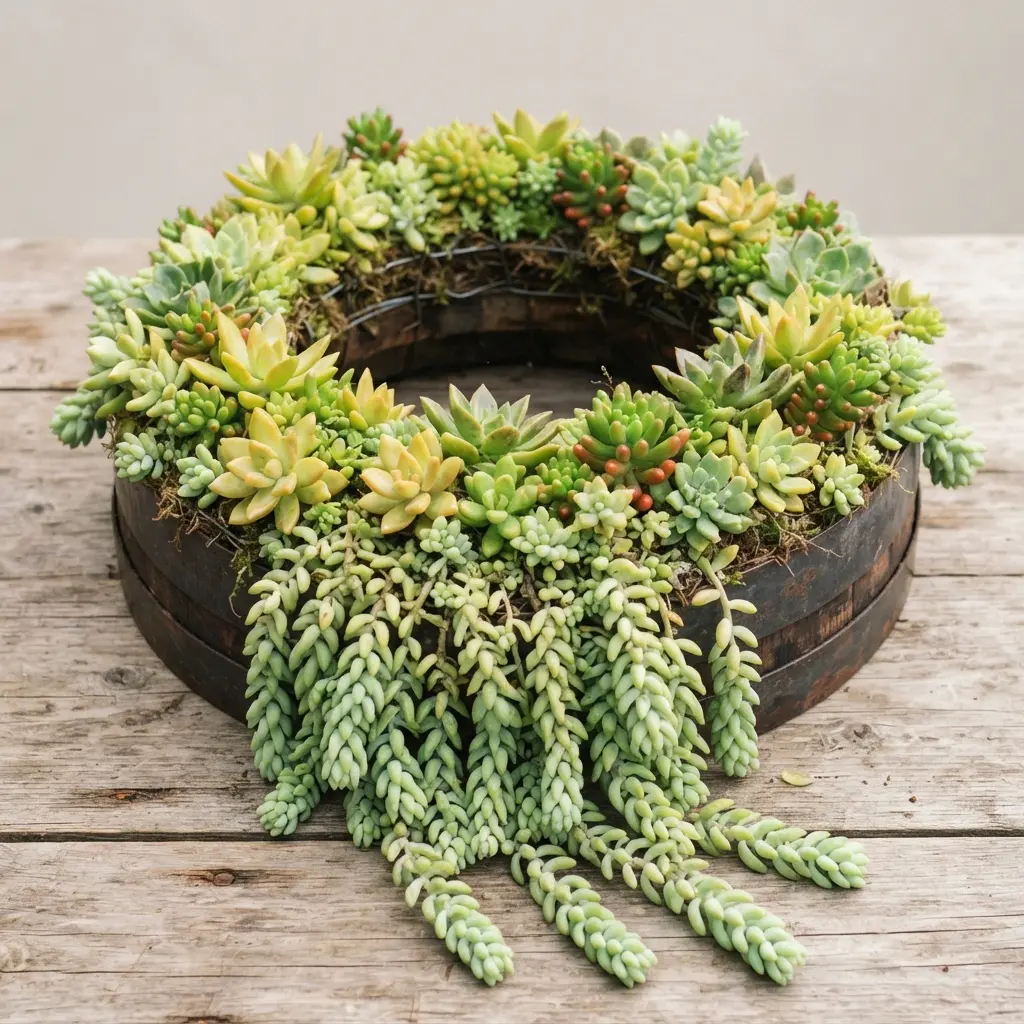
Ever wanted a sun-drenched diy wine barrel ring succulent wreath that keeps growing and changing all season? This version answers you perfectly. You will build it on a sphagnum moss wreath frame, soaking it first so it holds moisture. Then, you poke holes and tuck in a mix of trailing sedum cuttings, like ‘Angelina’ and ‘Dragon’s Blood’, letting them spill over the edges.
I love how these plants thrive on neglect, making this project perfect for a bright, dry spot. The key is to let your new creation lie flat for a few weeks so the cuttings root firmly. Trust me on this one. Once established, you hang it up and enjoy a living, cascading display that improves with time.
4. Colorful Hens and Chicks Arrangement
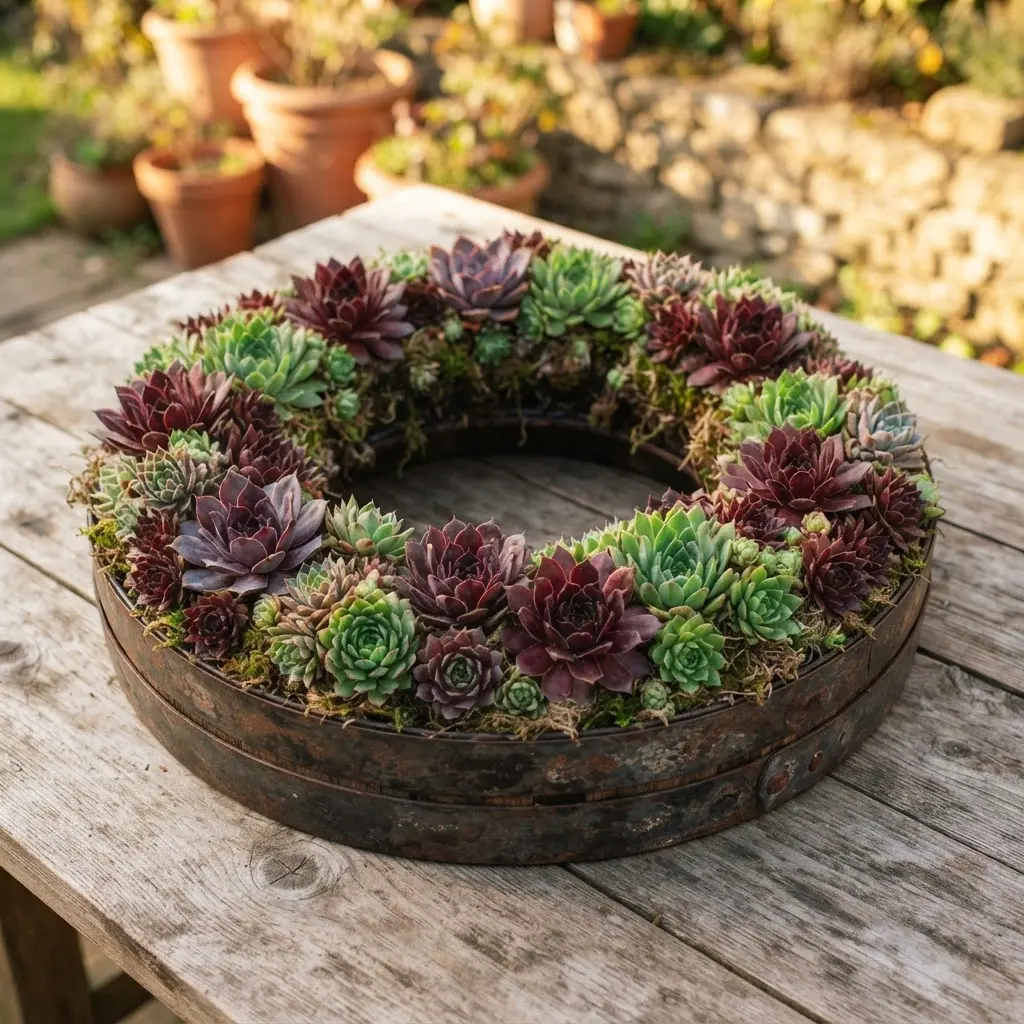
Ever wondered how to build a colorful diy wine barrel ring succulent wreath for a huge pop of color with almost no effort? This arrangement answers you directly. It centers around gathering several different Sempervivum varieties and packing their rosettes tightly together. You will place the larger hens first as your anchor points, then tuck the smaller chicks into every gap. The result creates a living mosaic of reds, purples, and silvers that looks professionally designed.
It works because you let the natural diversity do the heavy lifting. I love how a simple terracotta pot becomes a vibrant focal point with this method. The key relies on using a specialized succulent mix to keep those roots happy and dry. For another stunning seasonal project using a wreath form, take a look at these beautiful DIY fall wreaths. Your colorful creation will look stunning on a patio table or garden wall.
5. Textured Industrial Metal Succulent Wreath
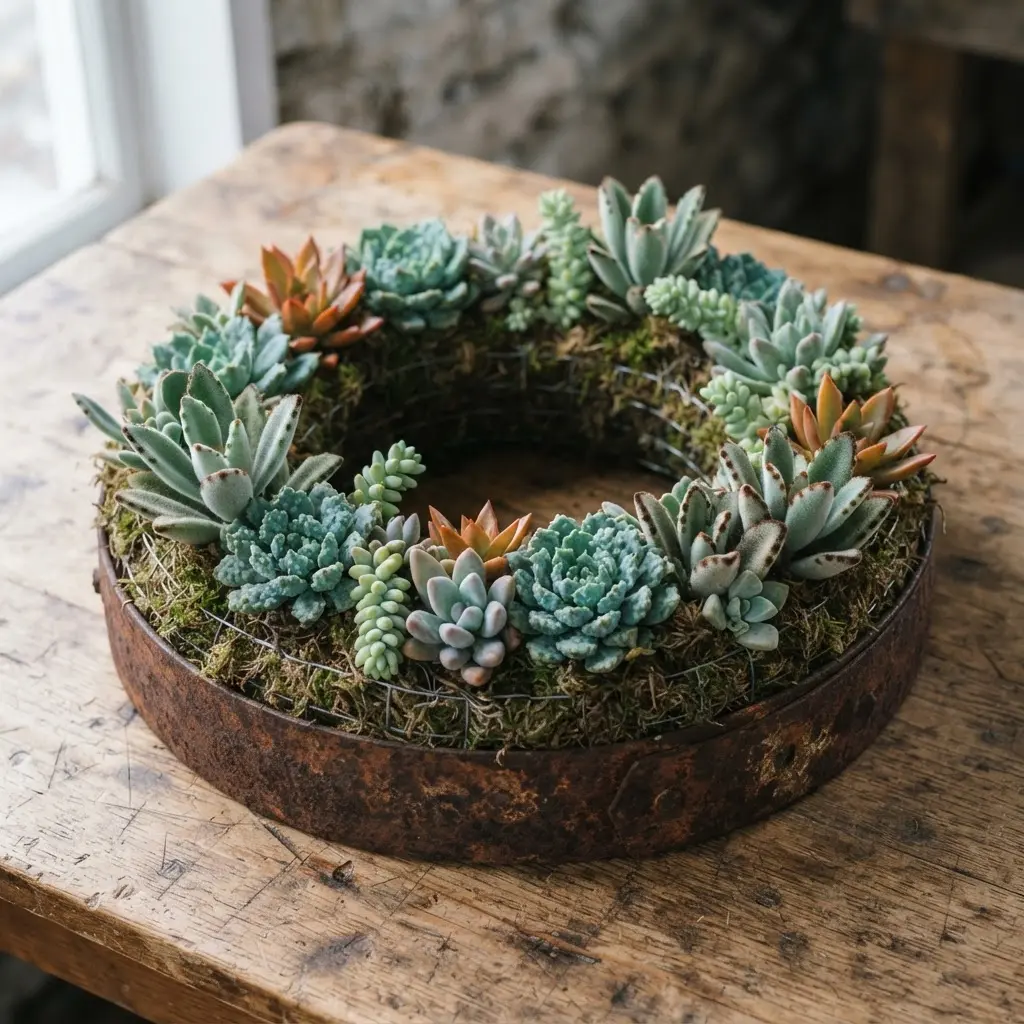
Assembling this diy wine barrel ring succulent wreath looks intimidating but proves surprisingly straightforward to put together. You start with a textured metal frame, which acts as the real star here. I love how raw steel or hammered copper instantly gives that rugged, modern feel. You then fill it with a mix of plants, pressing them into a well-draining cactus mix.
It works because the soft, living foliage creates a gorgeous contrast against the hard, industrial material. The result forms a statement piece that feels both alive and edgy. For a more personal touch, you can explore personalized initial wreath designs using the exact same metalworking approach.
My go-to tip suggests always using a specialty succulent soil to prevent root rot. Try it and feel that mix of urban cool and garden charm come together.
6. Beach Inspired Blue Succulent Wreath
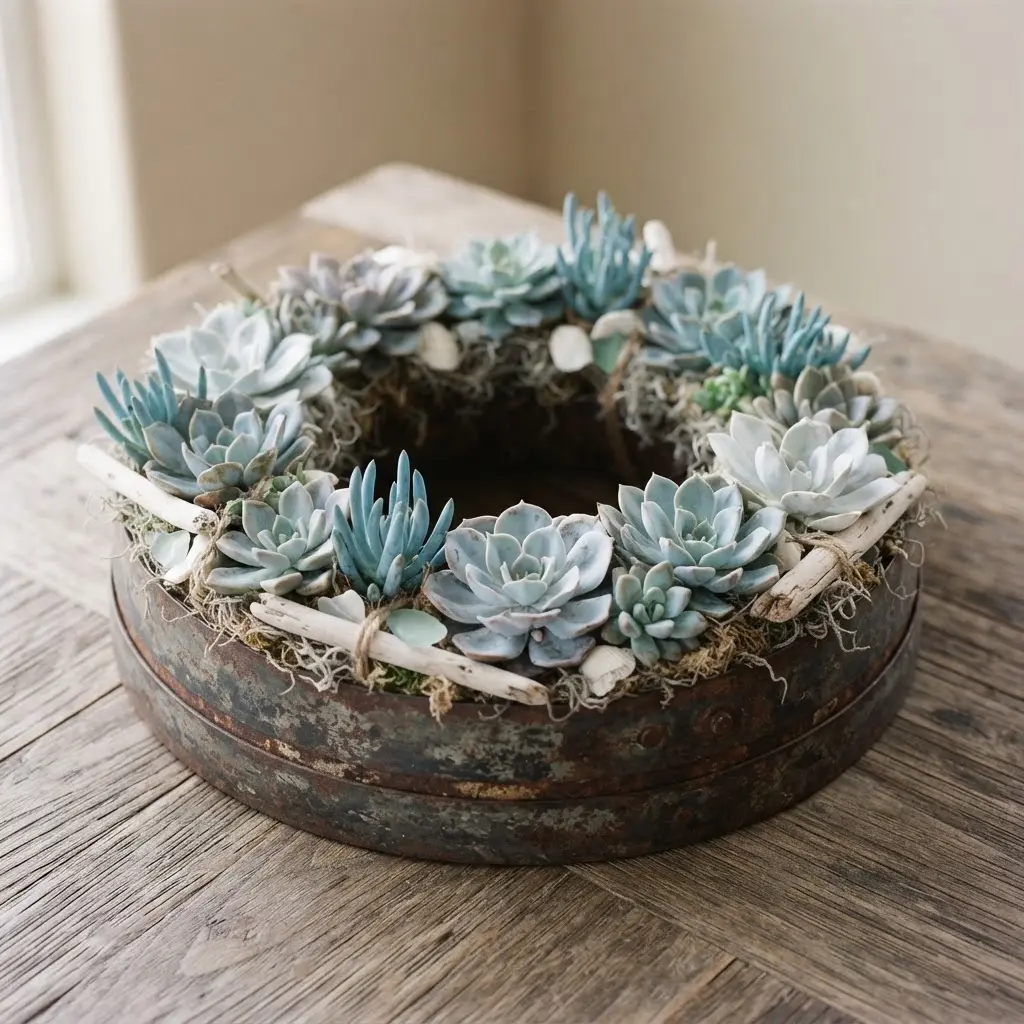
Creating a beach inspired diy wine barrel ring succulent wreath remains a personal favorite of mine. It looks sophisticated, but the secret involves using artificial succulents for a low-maintenance project that lasts forever. You will build your design on a natural grapevine base, gluing down a mix of blue-toned plants like Echeveria ‘Blue Atoll’ and adding accents of sea glass and driftwood.
Trust me, doing a dry run arrangement before you glue makes all the difference for a balanced look. The result delivers a stunning piece of coastal decor that brings ocean calm right to your wall. If you love the idea of a star-shaped focal point, search for beautiful star-shaped wreath decorations to incorporate for extra beachy charm. Does that not feel wonderfully serene?
7. Evergreen Sedum Jelly Bean Wreath
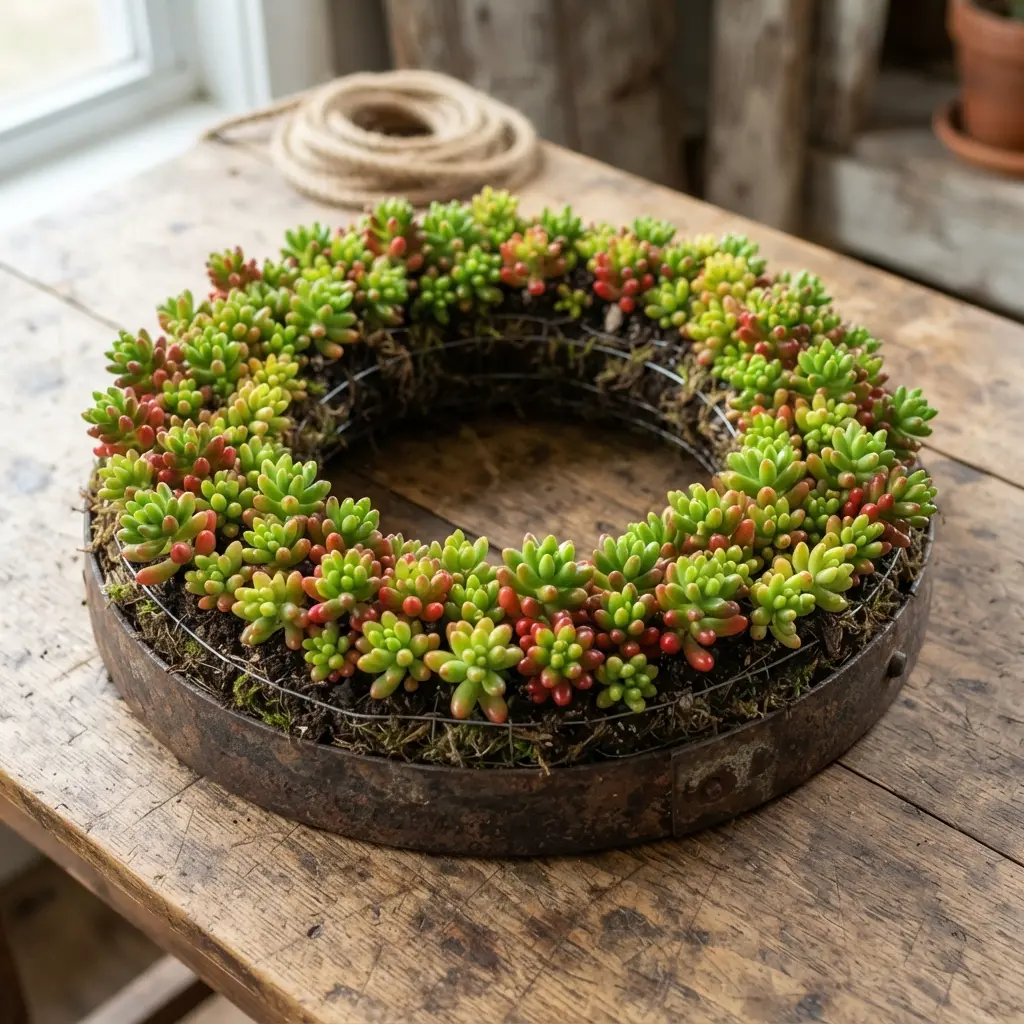
Doesn’t a fresh diy wine barrel ring succulent wreath look like a cheerful little garden party on your door? You take those plump, bean-shaped cuttings and nestle them into a sphagnum moss wreath form. I love watching the colors shift from green to brilliant red tips when the sun hits them correctly.
It works because you combine the easy-going nature of these plants with a classic circular shape. Trust me on this one, letting the cuttings callus over for a day before planting avoids rot. For another festive twist, you could look into wreath ideas using holiday cards to pair with your living decor.
Feel that burst of fresh, textured charm every time you walk inside.
8. Architectural Gasteria Spiral Ring Design
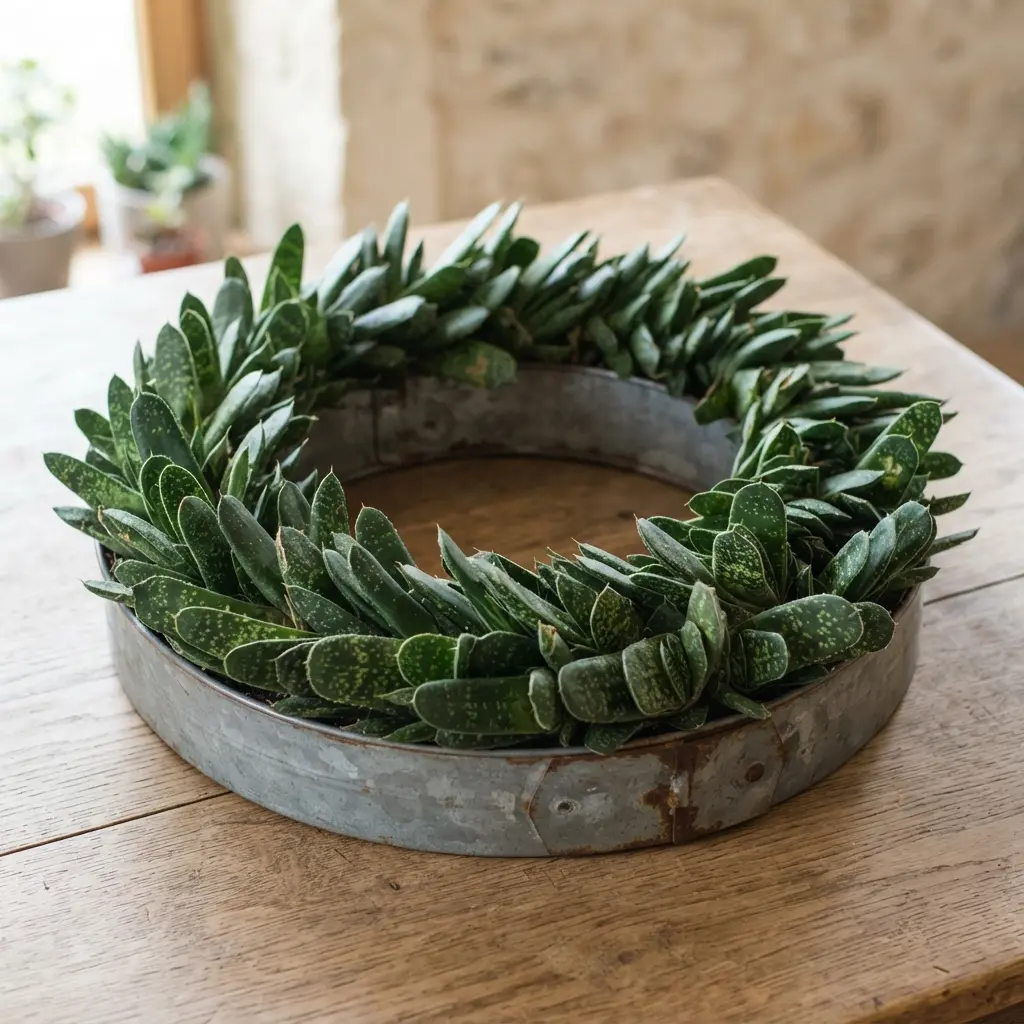
Designing an architectural diy wine barrel ring succulent wreath looks intimidating, but trust me, the approach makes it surprisingly logical. You essentially stack and overlap those flattened ‘leaf’ elements into a precise spiral around the band. The key focuses on maintaining clean, crisp lines and the deliberate negative space between each piece. Isn’t it satisfying when a plan comes together with such sharp geometry?
I love how this design works because it transforms an organic spiral into something structured and modern. Getting the spacing right proves crucial, so take your time with the soldering and assembly stage. For another project with a strong, sculptural form, you might find inspiration in a unique cornucopia heart wreath. Feel the pride of creating something that resembles both natural growth and engineering.
9. Ombre Gradient Rosette Succulent Wreath
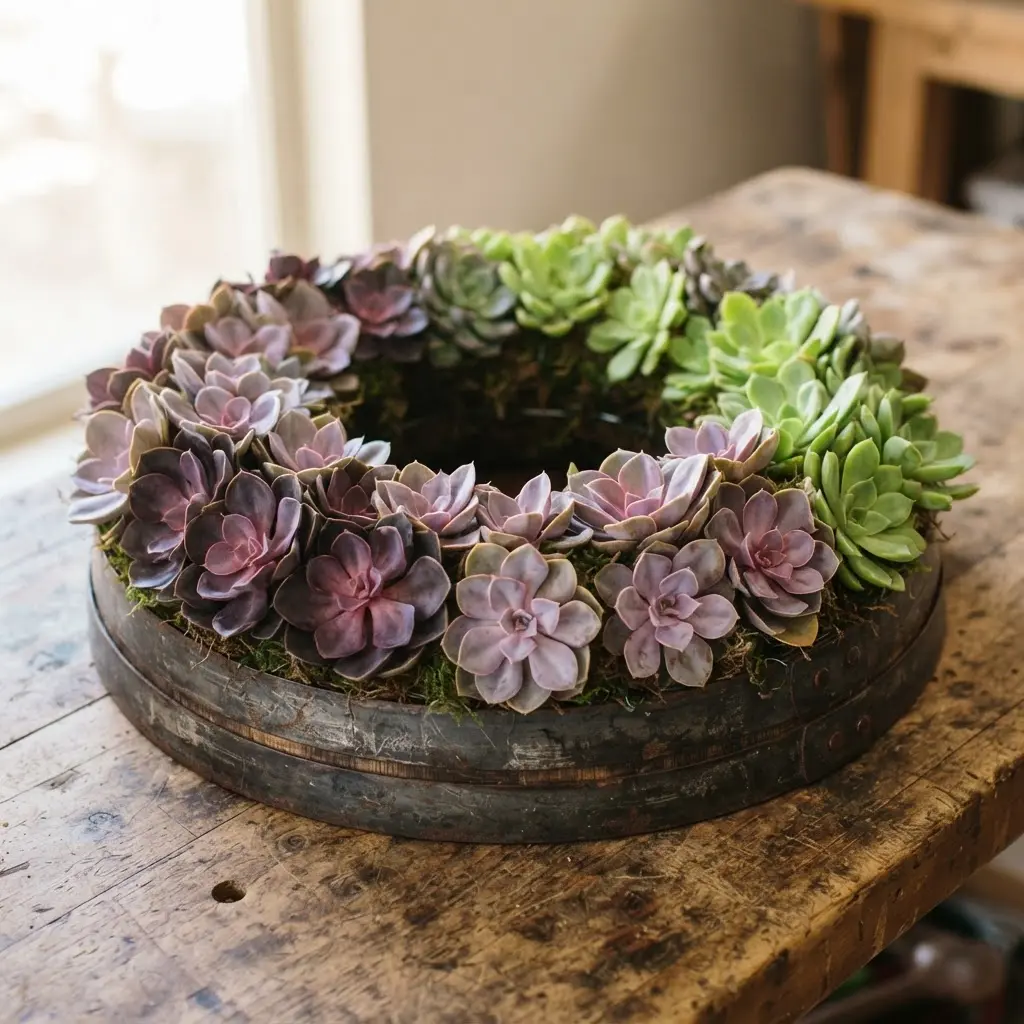
Arranging an ombre gradient diy wine barrel ring succulent wreath looks fancy, but the secret simply involves organizing your plants by color. You will arrange rosette specimens like Echeveria in a smooth transition from light to dark around a sphagnum moss wreath form. The trick requires laying them all out first to visualize that perfect gradient before you pin them in place.
It works because the natural color variation creates a living composition that feels peaceful and dynamic. Let the cuttings callus for a few days to prevent rot, and trust me, you will love the stunning result. For another personal touch, you could add a monogram to your summer wreath with the exact same technique.
10. Wildflower Inspired Mixed Succulent Wreath
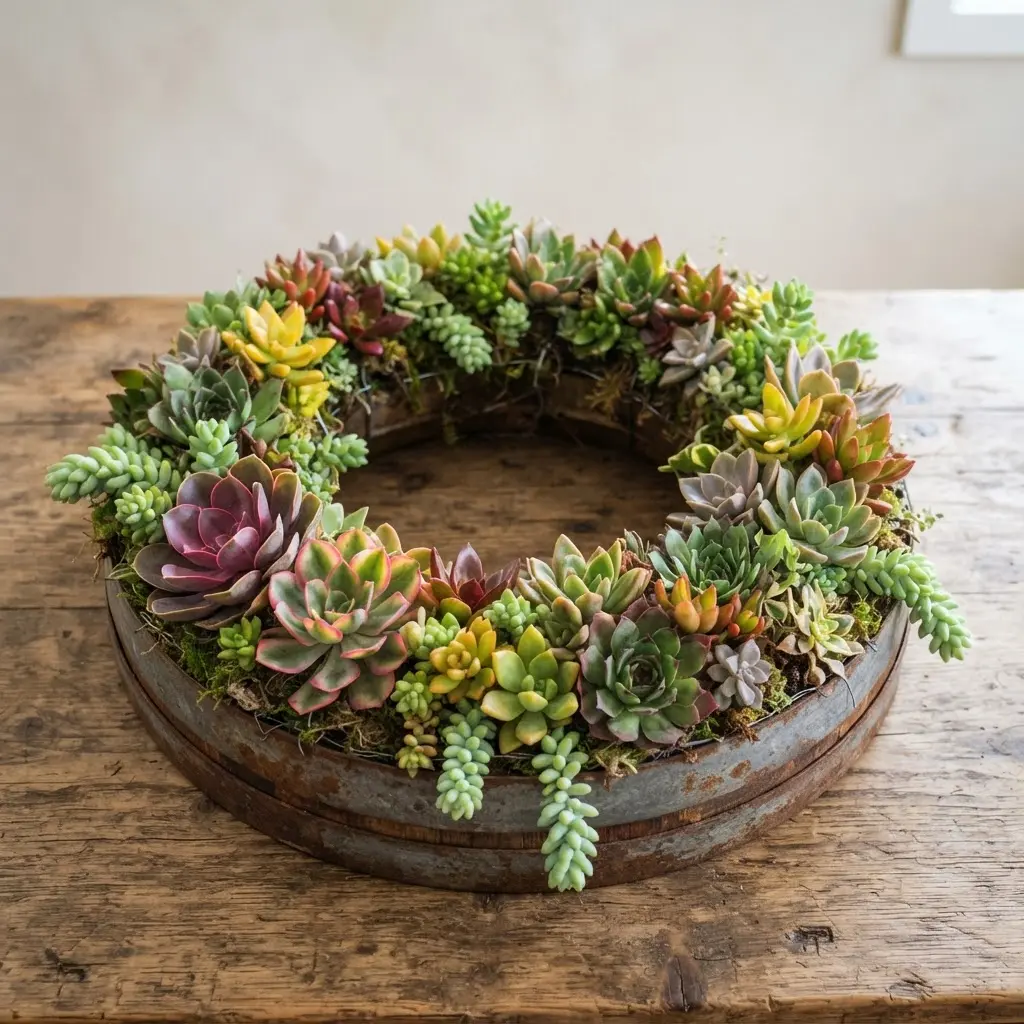
Planting a wildflower inspired diy wine barrel ring succulent wreath stands as my absolute favorite because it feels like wearing a meadow on your door. The key involves embracing a bit of controlled wildness. You will start by placing a few larger focal point succulents in an asymmetrical pattern, then fill in around them with a vibrant mix of rosettes, spiky types, and trailing varieties. I love to tuck in something fuzzy like a Kalanchoe tomentosa for extra texture.
Why does this work so well? It captures effortless natural charm while remaining wonderfully low maintenance. Just remember to let your cuttings callus properly to prevent rot. Once hung, your creation evolves and grows much like a real garden. For another coastal-inspired project using natural materials, you might enjoy a coastal seashell wreath craft.
Maintenance for Long Term Vertical Growth
Watering your diy wine barrel ring succulent wreath requires laying it flat on a towel and misting the sphagnum moss thoroughly every two to three weeks, never while it hangs vertically. You will notice the substrate dries out much faster than soil in a pot, so maintaining a consistent schedule prevents dehydration. After watering, let the ring drain completely in a horizontal position for an hour before you hang it back up. This prevents pooling at the bottom and ensures even moisture distribution.
Rotate the piece a quarter turn each month so every side receives equal light, encouraging symmetrical growth. Pinch back any overgrown trails to maintain the original shape and promote a fuller, compact appearance.
Conclusion
So, did any of these diy wine barrel ring succulent wreath spark that creative itch? Look at the potential sitting right there—taking a simple circle of aged metal and turning it into a living piece of art for your door or garden wall represents a real skill. My best advice tells you to start with the style that speaks to you most, whether that means clean modern lines or cozy cottage abundance. Take your time selecting plants, play with placement before you secure them, and remember that these little guys grow and fill in beautifully. Your finished display becomes a unique reflection of your personal touch, changing subtly with the seasons.
FAQs
Q: What type of moss is best for a succulent wreath?
A: Sphagnum moss remains the top choice. It holds moisture well to keep roots hydrated but also allows excellent drainage, which proves critical to prevent rot. Presoak the material before you start planting to make it easier to work with.
Q: How long will a succulent wreath last?
A: With proper care, the arrangement thrives for many months to years. The plants eventually outgrow the ring over time. You can prune them back or carefully remove and replant specimens to refresh the design.
Q: How do I water a wreath hanging on my door?
A: The easiest method requires taking the piece down before watering. Soak the entire moss-filled ring in a tub for about fifteen minutes, then drain completely before rehanging it. Only add moisture when the foundation feels completely dry to the touch.
Q: Can I use a new wine barrel ring or does it need to be old?
A: You use a brand new ring, but weathered material provides instant rustic character and authenticity central to this garden decor trend. If you start with a fresh piece, accelerate the aging process with vinegar or steel wool solutions.
Q: What are the best succulents for beginners to use?
A: Echeveria and Sempervivum varieties prove forgiving and arrive in many colors. Sedum types remain hardy and fast-growing. Choose plants displaying plump, firm leaves and skip any that appear stretched or discolored.