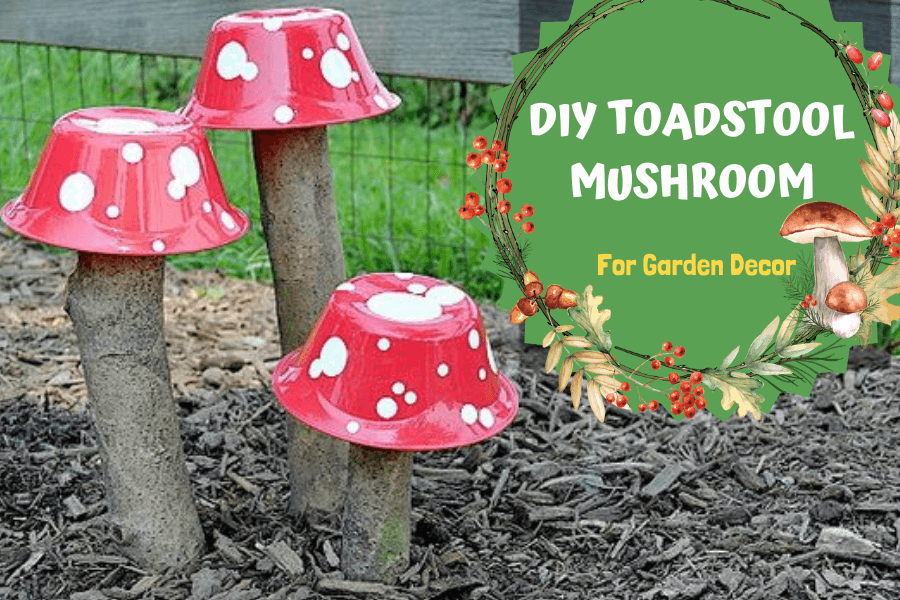
Step-by-Step Tutorial to Make a DIY Toadstool Mushroom
With tree trimming this year, we found some pretty, thinner branches that made the perfect base for my mushroom idea. This simple tutorial will help you make one, too.
Step 1: Sourcing Materials from the Craft Store
I found these little bowls at Walmart. My plan had been to find them at the dollar store, but these were $.88 for three of them—can’t beat that price! And I loved the shape; the bottom isn’t super flat like the ones I found at the dollar store. All I needed was something to make the dots. While I had some in my crafting supply from my scrapbooking days, you can find vinyl at any craft store, Amazon, and at auto supply stores. To start, you just need to buy or gather these basics.
Step 2: Preparing the Mushroom Stalk
I began by trimming the logs down to the size I wanted, at 10, 13, and 16 inches. I did trim both ends to make sure I had a flat surface. These logs, which form the mushroom stalk, fit well into my bowls and are about 2 to 3 inches across in circumference. The saw I use is a compound sliding miter saw. And yes, I do my cutting, but because I was taking photos and needed a set of hands, hubby did assist me so that I had photos of the process. If you have a little tool knowledge you can do this craft, or get a little help from an experienced handyman.
Step 3: Assembling the Toadstool
I adjusted the logs to make sure I like the configuration and set up. Then I asked hubby to give me a scrap piece of wood. It doesn’t matter what it looks like too much, because it will be covered with mulch in the mushroom garden. I traced the logs in place to make sure they stayed how I wanted them, and numbered both the spots and the logs to remember.
Begin by pre-drilling the logs so the wood doesn’t split when the screws go into it. Drill also some holes to place the logs, drilling them all the way through the wood. Use some all-purpose screws and put them through the bottom of the board, into the log. Tighten so the logs don’t move. This sturdy base creates a safe house for any visiting gnome.
Step 4: Attaching the Mushroom Cap and Spots
Place the bowls onto the logs to form the mushroom cap and pre-drill again for the screws. Add the screw to keep the bowl into place; it will be covered with vinyl spots. Take your white vinyl and use either punches or a compass to create circles on the back. Remove the backing and place the white vinyl dots all over the red bowls to attach the spots. I varied sizes and overlapped some of the vinyl onto the top of the mushroom to give it a unique style. You can also paint the spots if you prefer art over vinyl.
Creative Variations and Styling Ideas
Once you master the basics, you can change the design to create a whole new look. Here are a few ways to inspire your next project:
- Giant Mushrooms: Use a large salad bowl and a thick stump to build a giant version.
- Kid-Friendly Version: For a safe project with a kid, use papier-mâché. Layer tissue paper and glue over a balloon to make the cap.
- Fairy House: Paint a small door on the log to turn it into a mushroom fairy home.
- Different Textures: Try covering the cap with fabric or moss for a natural feel.
Every new version you create adds character to your garden.
Alternative Project: How to Sew a Toadstool Cushion
If working with wood isn’t for you, you can sew a soft toadstool cushion instead. Using fabric pattern pieces, you can cut a circle from a red piece of fabric for the cap and use white felt for the spots, which can be attached with fabric glue or simple embroidery. To create a tube for the stalk, sew two pieces of muslin fabric together along the edges. After filling both parts with stuffing, you can sew the stalk to the underside of the cap to make one adorable toadstool stool. This homemade thing is perfect for nurseries.
Conclusion
And there you have it! With a few simple materials and a bit of creativity, this project is a fun-to-make addition to your yard. The wood is not made with pre-treated wood boards because the logs are already not treated, so they should last several years. By following these steps, you now know how to make a DIY toadstool mushroom that will bring a touch of magic to any garden setting. We hope you see how easy it is to share this craft with friends. If you want to make more garden projects, check out our other tutorials!
FAQs
Q: What is a simple DIY toadstool mushroom project to start?
A: A simple DIY toadstool mushroom you can start is made from air-dry clay or a foam ball for the cap and a painted cardboard or wooden dowel stem. Sculpt a rounded cap, attach to the stem, smooth seams, then paint the cap red and add white spots for the classic mushroom fairy look. This easy craft is great for a kid-friendly session, can be styled as a mushroom fairy prop, and is a good new version to inspire seasonal décor or a small garden gnome scene.
Q: What materials should I buy or use for a homemade toadstool mushroom?
A: For a homemade toadstool mushroom, buy or gather air-dry clay, foam balls, wooden dowels, cardboard, papier-mâché, tissue paper for texture, acrylic paint, sealant, and craft glue. If you want giant versions, use larger foam or papier-mâché over a chicken wire frame. Tissue paper can create lacy gills, and paint choices let you change style from realistic to whimsical fairy or gnome-themed designs.
Q: How can I paint a realistic or fairy-style mushroom cap?
A: To paint a realistic cap, layer earth tones (browns, ochres) and dry-brush highlights for texture, then seal. For a fairy-style or mushroom fairy look, prime the cap white, paint a bright red base, add spotted white details, and finish with varnish or glitter for magical shine. Use sponges for texture and consider painting tiny doors or windows to show a gnome or fairy home design.
Q: Are there easy toadstool mushroom projects suitable for kids?
A: Yes—easy projects include painting pre-cut wooden mushroom shapes, gluing tissue paper to foam cones, or assembling paper plate and cup mushrooms. Supervise cutting and hot glue use; instead choose child-safe glue and blunt tools. These quick new projects are ideal for group craft time, birthday parties, or school activities and can inspire imaginative play with small fairy or gnome figures.
Q: How can I change the style to make a giant or mini mushroom?
A: You change scale by choosing different armatures: use chicken wire and papier-mâché for a giant mushroom, or polymer clay and beads for tiny versions. Style changes—realistic, whimsical, or modern—come from paint palette, added elements like tiny doors for a mushroom fairy home, or metallic accents. Mixing materials like tissue paper for gills and fabric for moss can create unique textures and inspire variations to share with others.